


- Thermal
How to Identify and Quantify Performance Losses in Power Plants Using Digital Twins
Combining pattern recognition and physics-based virtual power plant technology
Why Performance Losses Are Hard to See
Every power plant is designed with a guaranteed heat rate and capacity. Those guarantees are defined during project development using static heat balances, the same diagrams EPC contractors use to promise a certain number of megawatts under specific conditions.
The problem? Those heat balances were never built for the people running the plant.
We asked EtaPRO’s Senior Vice President & Chief Operating Officer Richard DesJardins, P.E. about this issue. This article explains how modern plants are using digital twins and thermodynamic models to identify performance losses in real time, quantify their financial impact, and prioritize corrective action before losses become forced outages or permanent efficiency degradation.
Why Traditional Heat Balances Can Fall Short
Designed for Guarantees, Not Operations
When an EPC contractor proposes a plant, they define:
- Expected capacity (MW)
- Expected heat rate (Btu/kWh)
- A narrow set of ambient and load conditions
Once construction is complete, those heat balances often become static reference documents that operators rarely use.
The Operational Gap
For plant teams, static balances:
- Don’t reflect real‑world operating conditions
- Can’t evaluate equipment degradation
- Don’t quantify the cost of deviations
As a result, operators may see a problem but not understand its true impact.
How Digital Twins Help Identify Performance Losses
The term digital twin is used widely, but in power generation it generally falls into two distinct categories:
- Pattern Recognition Digital Twins
- Physics-Based Digital Twins
Pattern Recognition Twins: Finding the Deviation
- Analyze historical operating data
- Build a reference model of “normal” behavior
- Detect anomalies when sensors or equipment deviate
These models are excellent at answering: “Something has changed. Where should I look?”
They commonly monitor:
- Motor current
- Flow
- Pressure
- Temperature
- Load and ambient conditions
However, they do not answer the next critical question.
Physics‑Based Digital Twins: Valuing the Deviation
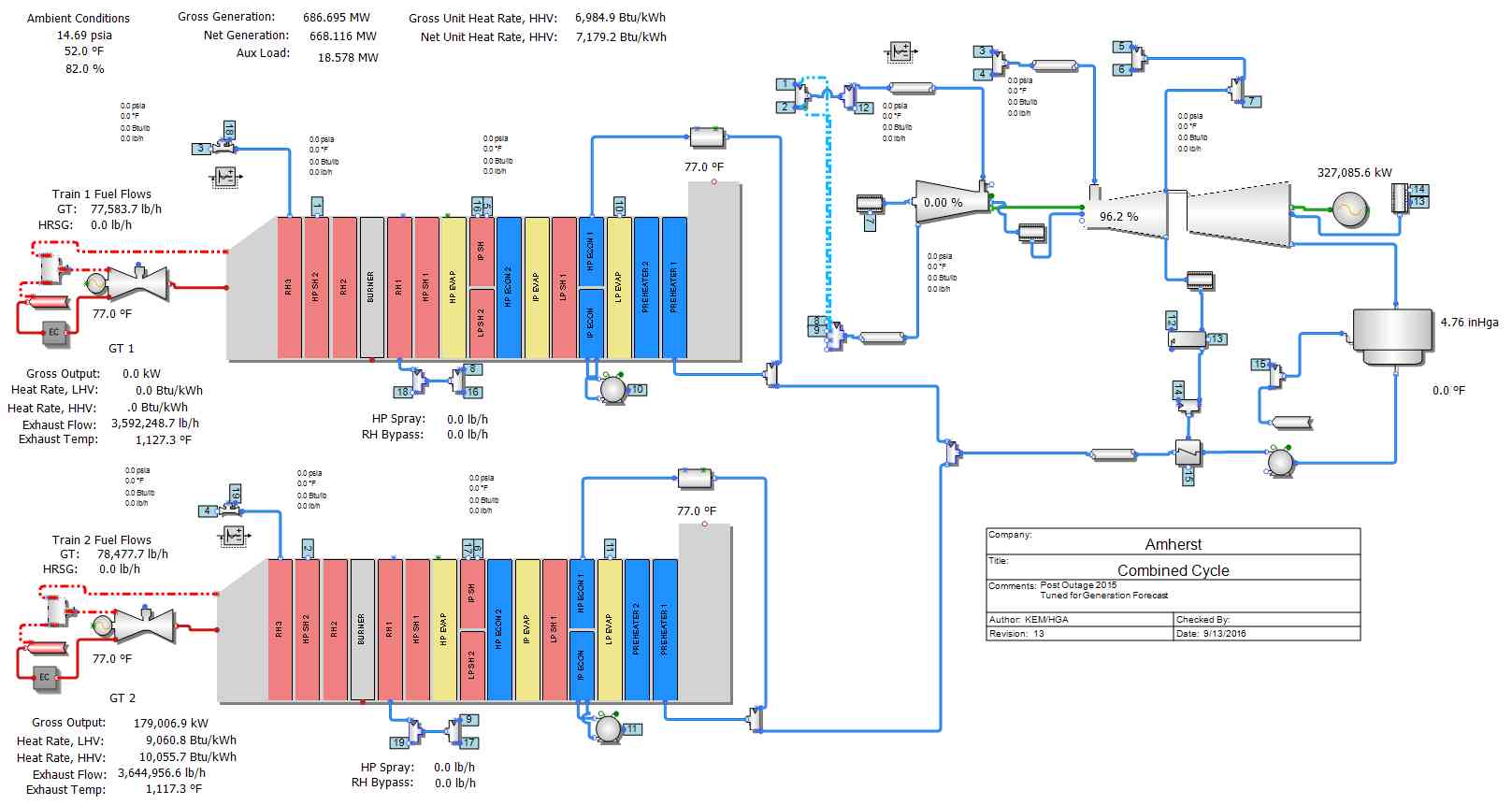
Physics‑based digital twins, also known as thermodynamic or heat balance models, solve a different problem.
They model:
- Gas turbine performance
- HRSG heat transfer
- Steam turbine efficiency
- Condenser and cooling system behavior
- How all systems perform together
Instead of just identifying a deviation, they answer: “What is this deviation worth in megawatts and fuel?”
Using “What-If” Analysis to Quantify Losses
Example: High Condenser Pressure
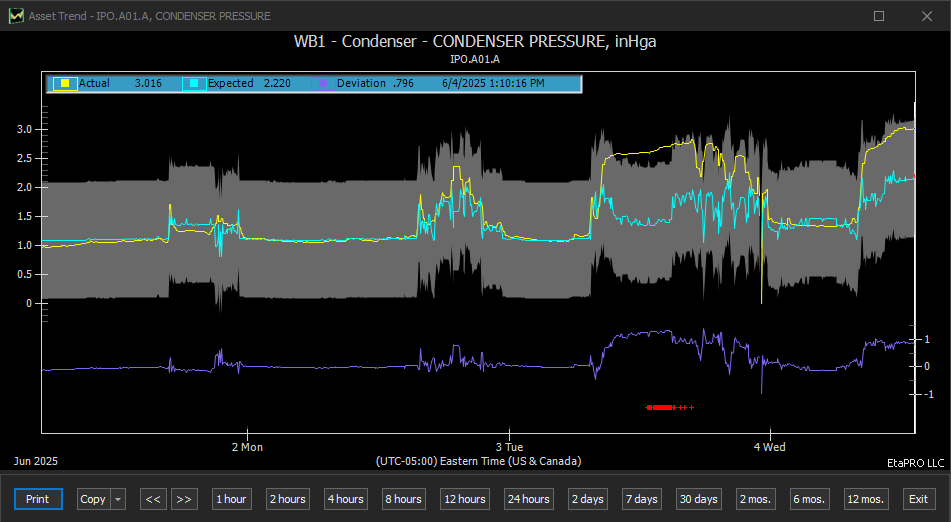
Pattern recognition may flag elevated condenser pressure. The digital twin allows operators to ask:
- How much capacity am I losing?
- How much additional fuel am I burning?
- Is this worth immediate corrective action?
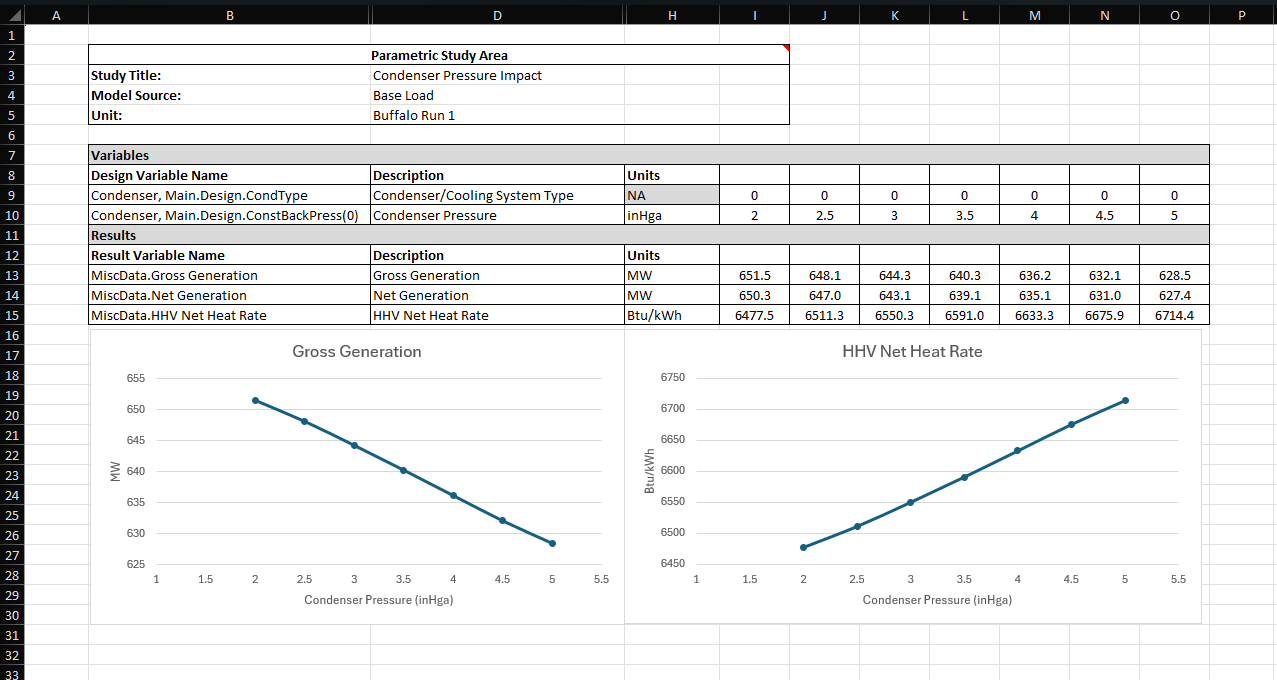
By adjusting a single parameter in the model, operators can instantly see:
- Lost MW
- Heat rate penalty
- Fuel cost impact
This transforms abstract alarms into actionable business decisions.
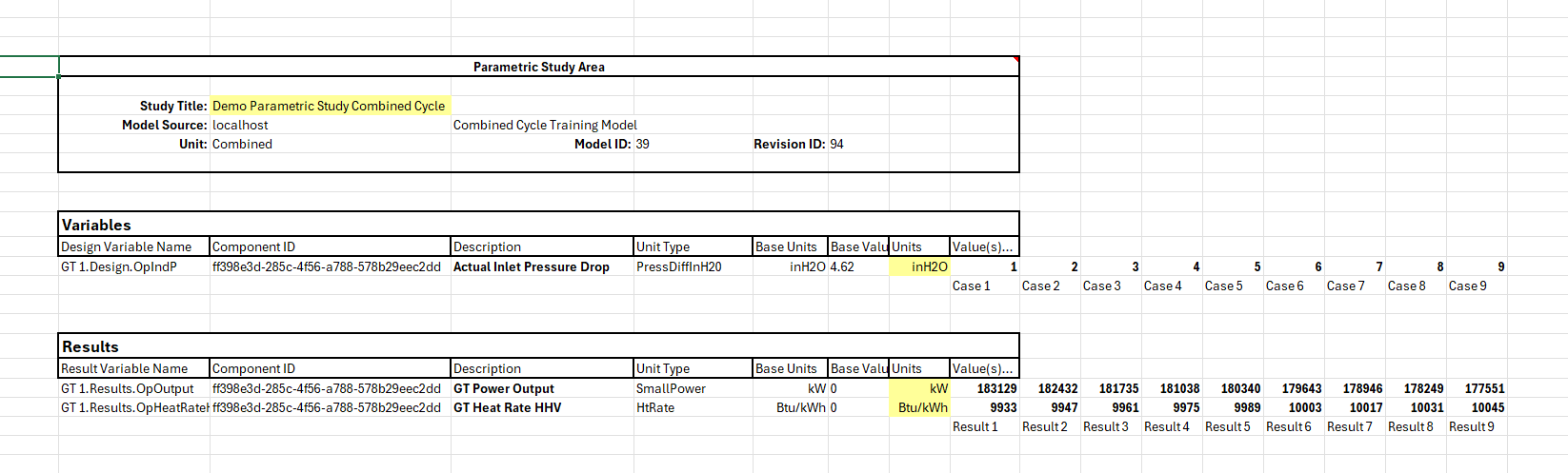
Example: Parametric Study Combined Cycle What-If
Identifying the Most Common Sources of Performance Loss
Digital twins help plants consistently identify losses tied to:
- Condenser fouling or cooling tower degradation
- HRSG effectiveness losses
- Gas turbine performance drift
- Valve leakage and steam path inefficiencies
- Sensor bias vs. true equipment degradation
The key advantage is context to know whether a deviation matters.
Why One Tool Is Never Enough
A recurring lesson in plant performance management: “When you’re a hammer, everything looks like a nail.”
Relying on a single technology leads to:
- Over‑maintenance
- Missed priorities
- Misallocated capital
The most effective plants use:
- Pattern recognition to find issues
- Physics‑based twins to value issues
- Engineering judgment to fix issues
Together, these tools reduce resistance and improve adoption across operations and maintenance teams.
Summary Table: Tools for Reducing Performance Losses
| Capability | Pattern Recognition | Physics Based Digital Twin |
|---|---|---|
| Detect anomalies |  |
 |
| Quantify MW loss |  |
|
| Quantify heat rate impact | |
|
| Supports what if analysis | |
|
| Operator decision support | Limited | High |
Final Takeaway: From Awareness to Action
Identifying performance losses is no longer enough. To reduce them, plant teams must understand:
- What changed
- Why it matters
- What it is worth
By digitizing heat balances and combining them with pattern recognition, modern power plants can move from reactive troubleshooting to proactive, value‑based performance management.
That’s how operators protect margins, improve reliability, and operate closer to design year after year.
Learn More About VirtualPlant
Explore how EtaPRO combines digital twins, performance monitoring, and what‑if analysis to help plants reduce losses, model performance, and improve decision‑making.
About Richard R. DesJardins, P.E.
Richard R. DesJardins is the Senior Vice President and Chief Operating Officer (COO) of EtaPRO with a BS in Mechanical Engineering and a Registered Professional Engineer. He has more than 40 years of global experience in power plant performance and reliability improvement using real-time digital technologies. He has been deeply involved in all aspects of engineering and commercial development of the EtaPRO platform since its inception in 1992. Rich is a thermodynamicist at heart and thoroughly enjoys power cycle modeling with VirtualPlant™ in his spare time.
Set a New Standard in Plant Performance & Reliability
Learn how EtaPRO can protect your assets, reduce downtime, and deliver measurable savings.